
Concrete is one of the most challenging types of construction waste to dispose of. It is heavy, often breaks into uneven chunks, and can be hard to reduce to smaller, manageable pieces. With concrete disposal, the main concern is not just how much space the material takes up, but how much it weighs.
A concrete disposal bin may look large enough to hold all your waste, but weight limits are easy to overlook. Overloading a bin can lead to extra fees, transportation problems, or pickup delays.
Whether you are removing an old patio, replacing a walkway, or working on a construction project, understanding concrete weight limits helps you choose the right bin and avoid unnecessary costs. This guide explains how to estimate your concrete waste, load a bin safely, and arrange disposal and recycling.
Why Concrete Weight Matters More Than Bin Size
A cubic yard of concrete typically weighs around 3,500–4,000 pounds (1,590–1,815 kg). Even a relatively small pile of broken concrete can weigh several tonnes. For example, five cubic yards of concrete can weigh approximately 17,500–20,000 pounds, which is a significant load for a disposal truck to lift and transport.
Every bin has its own weight limit. The maximum it can safely carry depends on the bin’s design, the lifting equipment, and local road weight regulations. That is why a bin can still have plenty of empty space while the concrete inside is already close to the permitted limit, and why bins built for concrete are often smaller and designed for heavy materials.
Choosing a bin based only on its size can lead to unexpected costs:
- Overage fees: Most bin rentals include a set weight allowance. If your concrete exceeds it, extra charges may apply based on the additional weight, and these can quickly raise your total cost.
- Dry run fees: If the truck arrives but cannot safely lift an overloaded bin, you may be charged a dry run or trip fee. You will also need to remove the excess concrete before another pickup, which adds labour and delays.
How Much Concrete Fits in a 4-Yard or 10-Yard Bin?
At Disposal King, two common options for concrete disposal are the 4-yard bin and the 10-yard heavy-duty bin. Both are built for heavy construction materials, but the right choice depends on the amount of concrete, access to your property, and the maximum weight allowed for pickup.
4-Yard Concrete Disposal Bin
A 4-yard bin is often a practical choice for smaller residential projects, such as:
- Removing a small concrete walkway
- Replacing a section of patio
- Breaking up old concrete steps
- Disposing of limited amounts of concrete from landscaping work
The bin’s nominal capacity is four cubic yards, but that does not mean it can always be filled with four cubic yards of solid concrete. At 3,500–4,000 pounds per cubic yard, a full load would weigh an estimated 14,000–16,000 pounds.
Actual loading must stay within the limit confirmed by your bin provider. A smaller bin can be the better option where space is limited or where multiple pickups can be arranged as demolition progresses.
10-Yard Concrete Disposal Bin
A 10-yard bin, sometimes called a rock box, is designed for larger quantities of heavy materials. It may suit projects such as:
- Driveway replacement
- Concrete slab demolition
- Sidewalk removal
- Larger patio renovations
- Commercial concrete removal
Although the bin has a nominal volume of ten cubic yards, its safe concrete load can be substantially less than full capacity. Five cubic yards of solid concrete alone could weigh around 17,500–20,000 pounds.
That is why larger concrete bins should never automatically be filled to the top. Depending on the load and permitted weight, a partial fill may already be enough. Before loading, ask your provider to confirm the maximum concrete load and recommended fill level.
Quick Bin Size Comparison
| Bin Size | Typical Project | Main Consideration |
|---|---|---|
| 4-Yard Bin | Small patios, walkways, concrete steps | Suited to smaller heavy-material loads |
| 10-Yard Bin | Driveways, larger slabs, major renovations | More loading space, but weight remains the limiting factor |
See all options and current pricing on our bin sizes and rates page.
How Do You Estimate Concrete Weight Before Renting a Bin?
For a quick estimate, measure the length, width, and thickness of the slab in feet. Multiply the three measurements to get cubic feet, then divide by 27 to convert to cubic yards.
For example, a patio measuring 12 feet long, 10 feet wide, and 4 inches thick contains about 1.48 cubic yards of solid concrete:
12 × 10 × (4 ÷ 12) ÷ 27 = 1.48 cubic yards
At an estimated 3,500–4,000 pounds per cubic yard, that works out to about 5,200–5,900 pounds of concrete. Broken pieces take up more bin space than an intact slab because of the gaps between them. These figures are planning estimates, not the bin’s approved weight allowance, so confirm the safe loading limit with Disposal King before booking.
How Do You Safely Load Concrete Into a Disposal Bin? 6 Practical Tips
Renting the correct bin is only part of the process. How you load the concrete matters just as much.
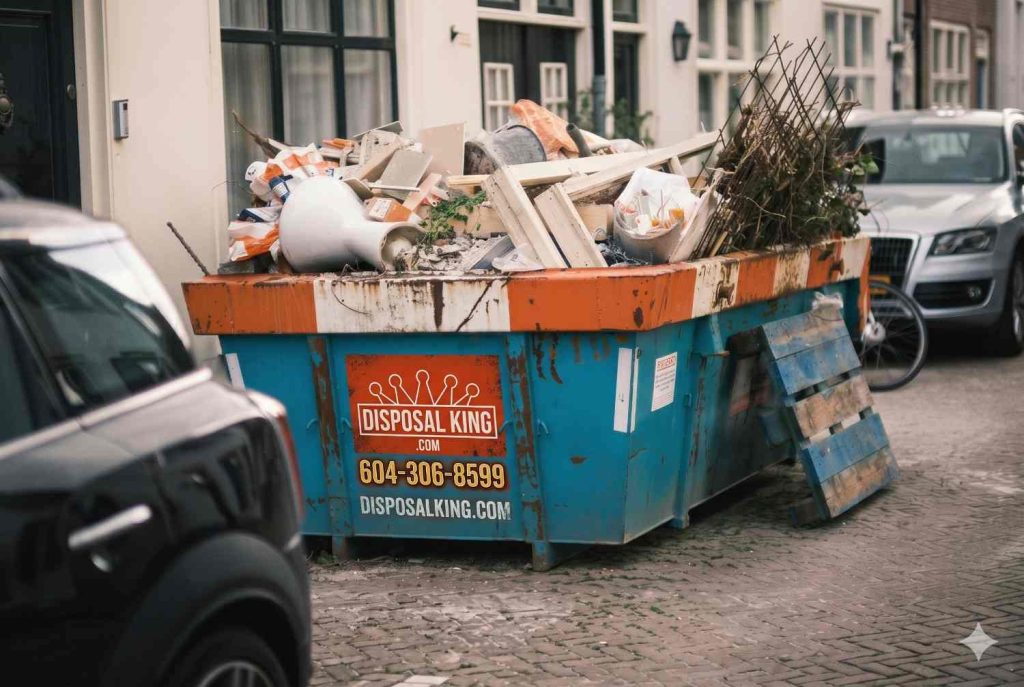
1. Break Concrete Into Manageable Pieces
Large slabs are difficult to lift, stack, and distribute evenly. Smaller pieces make loading easier and help avoid concentrated weight in one area. Use proper demolition equipment and protective gear, and arrange mechanical help for pieces that cannot be handled safely.
2. Distribute Weight Evenly
Avoid placing the entire load at one end or along one side of the bin, as an uneven load makes lifting and transport harder. Spread material across the bin floor while staying below the approved weight limit.
3. Never Load Above the Permitted Fill Level
A bin that looks only half full may already hold several tonnes of concrete, so do not assume filling to the rim is acceptable. Follow your provider’s fill instructions, and never let debris extend above the container’s sides.
4. Keep Concrete Separate From Other Waste
Concrete recycling works best with clean material. Keep household garbage, wood, insulation, plastic, and unrelated construction debris out of a dedicated concrete bin. A contaminated load may need extra sorting, incur charges, or be rejected by a recycling facility. Check our accepted materials guide if you are unsure.
5. Check for Rebar and Metal Reinforcement
Demolished concrete often contains reinforcing steel or wire mesh. Some recycling facilities can process reinforced concrete, but handling requirements and fees may differ. Disposal King applies an additional charge for clean concrete loads containing rebar or mesh, so confirm the rate before booking.
6. Plan the Bin’s Placement Before Delivery
Choose a spot where the delivery truck can safely drop off and retrieve the bin. A level, stable surface with enough clearance is best. Also consider driveway protection, nearby vehicles, overhead obstructions, and whether placing a bin on a public street requires municipal permission. A little preparation prevents avoidable delays on delivery day.
What Happens to Concrete After Pickup?
One advantage of responsible concrete disposal is that much of the material can be recycled instead of going straight to a landfill. Suitable clean concrete is transported to a processing facility, where it may go through several stages:
- Sorting and inspection: Unwanted debris and contaminants are identified and separated.
- Crushing: Large pieces are broken down into smaller particles with specialized equipment.
- Metal separation: Steel reinforcement is removed and sent for metal recycling.
- Screening: The crushed material is sorted into different sizes for reuse.
The processed concrete can become recycled aggregate for road base, construction fill, and certain landscaping or infrastructure projects. Recycling reduces demand for newly quarried aggregate and keeps useful material in circulation.
How to Arrange Concrete Disposal for Your Project
Choosing a local provider that understands heavy-material transport makes any concrete project simpler. Disposal King provides bin rentals for concrete disposal across Metro Vancouver, the Fraser Valley, and the Okanagan.
Whether you are removing a small residential walkway or managing a larger demolition, our team can help you choose a suitable bin and plan a safe pickup. To get started, estimate how much concrete you need to remove, note any other materials, and confirm the delivery location.
Then rent a disposal bin online or call Disposal King at 604-306-8599 for help.
Frequently Asked Questions
How much concrete can a 10-yard disposal bin hold?
A 10-yard bin has a nominal volume of ten cubic yards, but it generally cannot be filled completely with solid concrete. Concrete is extremely heavy, and the permitted load depends on the bin and transportation limits. Confirm the approved weight and fill level before loading.
Can broken concrete be recycled?
Yes. Suitable clean concrete can be crushed and processed into recycled aggregate for road base, construction fill, and other approved uses. Eligibility depends on the condition and cleanliness of the material.
Can I put bricks and soil in the same bin as concrete?
Not automatically. Brick disposal and soil disposal may need different arrangements or affect whether a load qualifies for clean-concrete recycling. Ask your rental provider before mixing these materials.
Is a 4-yard bin enough for a small patio?
It may be. The right bin depends on the patio’s length, width, thickness, and estimated weight. Measuring the slab before demolition helps your provider recommend an appropriate size.
Ready to Plan Your Concrete Disposal?
Choosing the right concrete disposal bin starts with an accurate weight estimate, the correct bin size, and safe loading practices. Whether you are removing a walkway or a driveway, Disposal King can help you plan your concrete waste disposal and confirm the bin requirements for your project. Request a quote or call 604-306-8599.
